
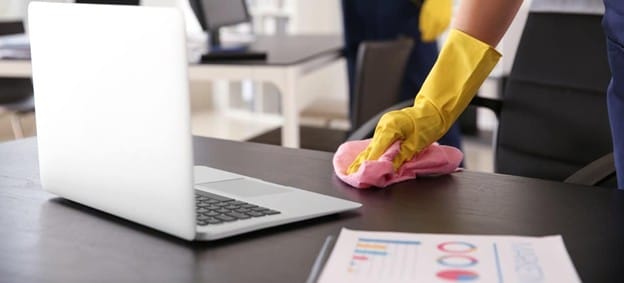
Flexible Cleaning for the Hybrid Workplace: Evergreen’s Customized Schedules for Modern Offices
The workplace isn’t what it used to be.Offices are no longer full Monday to Friday. Employees now come in for collaboration days, team meetings, or client visits. Some floors are busy mid-week, others are half-empty most of the month. And as occupancy patterns shift, one truth has become impossible to ignore:
You can’t use a 2019 cleaning model for a 2025 workplace.
Many Canadian offices worldwide report sharply lower utilization compared with 2019 levels; CBRE’s own global occupancy benchmarking shows recent average office-utilization rates hovering around 30–40%.
Traditional contract cleaning, five days a week, same routine, same timing, was never designed for this kind of variability. Property managers end up overpaying on slow days and under-cleaning during peak days. Tenants notice. Complaints rise. Budgets get squeezed.
This is where Evergreen’s flexible cleaning model shifts the entire conversation.
Instead of locking clients into a rigid schedule, Evergreen builds service plans that move with your building, adjusting to occupancy, usage patterns, and seasonal demands. Heavy cleaning on busy days. Light service when the office is quiet. On-demand support for meetings and events. And sustainable options that reduce waste, not quality.
In a world where offices operate differently every week, flexibility isn’t just nice to have; it’s the only cleaning strategy that still makes sense.
This blog will break down how the hybrid workplace changed cleaning needs, why flexible schedules save money while improving quality, and how Evergreen builds custom cleaning plans for Canada’s most modern workplaces.
If you’re ready to build a cleaning plan that fits your schedule, not the other way around, Evergreen can help.
Ask Evergreenabout a hybrid cleaning plan designed around your occupancy.
What Hybrid Work Really Looks Like Today
Before we talk solutions, let’s look at the reality inside most modern office buildings.
Hybrid work isn’t a trend anymore. It’s the new baseline.
StatsCan reports that almost 40 percent of Canadian workers now have some form of hybrid or flexible schedule and those numbers are rising in major markets like Vancouver, Calgary, Edmonton, Toronto, and Ottawa.
This shift creates cleaning patterns that look more like waves than straight lines.
1. Occupancy now fluctuates day-to-day
Instead of predictable five-day usage, building traffic now spikes and dips:
- High traffic: Mid-week (Tues–Thurs)
- Moderate traffic: Mondays
- Low traffic: Fridays
This affects everything from desk sanitation to washroom cleaning frequency.
2. Meeting rooms drive sudden cleaning needs
Hybrid teams often stack meetings on in-office days. This leads to:
- Spillover food waste
- Whiteboards and tables needing resets
- Surges in washroom usage
- Trash increasing quickly after lunch periods
A static nightly cleaning schedule can’t keep up.
3. Shared spaces are used differently than before
Hot desks, collaboration zones, quiet pods, and kitchens all see dramatic variation depending on:
- Team schedules
- Project cycles
- Seasonal demands
- Client visits
The Public Health Agency of Canad still recommends enhanced cleaning of shared surfaces during cold/flu season, even in hybrid offices.
4. Property managers face budget pressure and rising expectations
With high vacancy rates across Canadian downtown cores, managers must:
- Reduce unnecessary cleaning costs
- Maintain high tenant satisfaction
- Stay competitive with building amenities
- Provide visible cleanliness to encourage in-office days
It’s a balancing act:
Cut costs without cutting quality.
5. Employees now expect visibly clean workplaces
Industry research backs this up. A global hygiene survey from Tork, shared through ISSA, found that 85 percent of employees say restroom cleanliness reflects overall building hygiene, and 67 percent are more likely to complain about restrooms than any other part of the workplace. You can see the summary here in the Tork workplace cleanliness study.
These findings underline the same point Evergreen sees on the ground every day: hybrid offices need cleaning that flexes with real usage, not a fixed schedule. That is exactly what Evergreen delivers with custom, data backed cleaning plans designed for fluctuating occupancy, shared spaces, and modern tenant expectations.

What Needs Cleaning Most in a Hybrid Office
Hybrid work may have reduced office occupancy, but it hasn’t reduced what needs to be cleaned; it has simply changed when and how much. The misconception many property managers start with is that fewer people automatically equals less mess. In reality, hybrid patterns concentrate traffic into unpredictable bursts.
And those bursts are exactly where cleaning quality rises or falls.
Shared Desks and Workstations
Hot-desking has exploded in hybrid workplaces. But high desk turnover also introduces higher exposure to germs, allergens, and surface contamination.
The Public Health Agency of Canada recommends regular cleaning of shared surfaces, especially during respiratory illness season.
What this means for your office
- Desks used heavily mid-week need full sanitation
- Monday/Friday stations can likely be spot-cleaned
- Cleaning schedules must match actual seating patterns, not assumptions
Meeting Rooms: The New Cleaning Hotspot
Office usage spikes around collaboration days, often mid-week.
This leads to:
- Coffee spills
- Food crumbs
- Touchpoints (chairs, tables, remotes) getting high turnover
- Full trash bins by 2 p.m.
Traditional nightly cleans miss mid-day resets, which tenants notice.
Washrooms and High-Touch Areas
Even with fewer people overall, washrooms often see intense usage clusters when hybrid teams land on site at the same time.
High-touch areas needing priority cleaning include:
- Faucet handles
- Soap dispensers
- Door hardware
- Paper towel levers
- Elevator buttons
- Kitchen appliances
Employees judge office hygiene by what they can see, and washrooms are the first place they look.
Kitchens, Breakout Areas, and Micro-Markets
Hybrid teams eat on-site more often than expected, especially on collaboration days. Kitchens go from spotless on Monday to overflowing on Wednesday.
This includes:
- Countertops
- Fridges
- Microwaves
- Coffee stations
- Dish sinks
- Food waste bins
Evergreen typically increases kitchen cleaning on mid-week days and reduces it on quieter days without affecting quality.
Why Hybrid Cleaning Needs a Different Approach
The key challenge isn’t dirt; it’s timing. A hybrid office isn’t messy every day. It’s messy on the same days every week.
That’s why Evergreen designs custom service plans that sync with occupancy patterns instead of forcing a flat routine across the entire week.
Learn how Evergreen designs hybrid-ready cleaning scopes

Evergreen’s Flexible Cleaning Model: A System Designed for Real-World Use
Hybrid work introduced something facility managers haven’t dealt with before: predictable unpredictability. Some days the office is full, other days it’s a ghost town and the cleaning schedule has to flex with that.
Evergreen’s flexible cleaning model is built exactly for this challenge. It’s not about cutting back or doing more. It’s about cleaning smarter, in a way that matches your building’s rhythm.
How Evergreen’s Flexible Model Works
1. Heavy Cleaning on High-Traffic Days
We increase service on days your office is busiest, typically mid-week.
This includes:
- Full workstation wipe-downs
- Intensive kitchen resets
- High-frequency washroom checks
- Floor care for lobby and hallway surges
- Waste removal multiple times per day
This keeps the workplace clean when employees actually see it.
2. Lighter, Cost-Efficient Service on Low-Occupancy Days
Mondays and Fridays often look like long weekends.
So Evergreen adjusts service to match:
- Spot-cleaning of desks
- Reduced frequency of trash collection
- Quick kitchen tidy
- Light floor care
You save money by not paying for services you don’t need, without sacrificing cleanliness.
3. On-Demand Meeting & Event Cleaning
Hybrid teams stack meetings on days they’re in the office.
Evergreen offers:
- Mid-day room resets
- After-event cleanups
- Spill response
- Touchpoint sanitation between sessions
This is a favourite add-on for corporate clients hosting board meetings or internal workshops.
4. Daytime Cleaning Options
Daytime and occupancy based cleaning can also support your sustainability goals. By aligning cleaning with when spaces are actually in use, buildings can reduce unnecessary after hours operations and support broader energy and resource reduction efforts that fit with programs like BOMA BEST.
BOMA BEST’s framework encourages green cleaning programs, efficient equipment, and smarter building operations, which is exactly where flexible Evergreen cleaning plans naturally fit.
Evergreen day porters provide:
- Continuous washroom checks
- Kitchen care
- Wipe-downs of shared surfaces
- Touchpoint sanitizing during flu season
5. Seasonal Flex: Flu Season, Winter Slush, or Summer Quiet
Hybrid offices shift their needs throughout the year. Evergreen adapts plans for:
- Flu season (increased disinfecting)
- Winter (salt, moisture, entrances)
- Summer (reduced occupancy, lower cleaning intensity)
We treat your building like a living system, not a static facility.
What Makes Evergreen’s Model Different
Evergreen cleaning plans are built on three core pillars:
- Flexibility: Service that scales up or down without contract headaches
- Transparency: Clear communication, digital cleaning logs, and a single point of contact
- Consistency: A stable cleaning team assigned to your site, so quality stays predictable
In a hybrid office world, these are the new must-haves, not the extras.
Explore Evergreen’s flexible cleaning packages

How Evergreen Builds a Custom Plan for Every Hybrid Workplace
A hybrid workplace doesn’t need more cleaning; it needs smarter cleaning. That begins with understanding how your building actually operates, not how the calendar says it should.
Evergreen’s process is simple, transparent, and built around real data rather than assumptions.
Step 1. On-Site Walkthrough + Occupancy Assessment
Every workplace has a rhythm. Some floors are busy mid-week. Others fill only during all-hands meetings. Washrooms on certain levels see triple the traffic. Kitchens become micro-hubs depending on team schedules.
Evergreen starts with a walkthrough to evaluate:
- Foot traffic flow
- Peak-use areas
- Hot desks vs. assigned seating
- Meeting room occupancy patterns
- Washroom usage
- Kitchen and micro-market demand
- Seasonal issues (like winter salt or flu season)
This gives us a real-time snapshot of how your building functions, not how the contract thinks it functions.
Step 2. Review of Security Badge & Room-Booking Data
Many modern offices already collect occupancy indicators like:
- Badge swipes
- Floor-by-floor access data
- Meeting room booking reports
- Utilisation data from systems like Envoy, Robin, or Teem
Of organizations with hybrid policies that require employees to work from the office, about 60% track attendance, primarily through security badging, and many use utilization tracking, reservation systems or visual observation.
We layer this data with on-site insights to design a cleaning schedule that aligns perfectly with real usage.
Step 3. Custom Scope of Work: Floor by Floor
Unlike generic cleaning companies that offer one “office cleaning package,” Evergreen creates a tailored plan for each client.
A typical hybrid SOW includes:
- Daily essentials for core areas
- High-frequency cleaning for mid-week surges
- Reduced service on low-occupancy days
- Touchpoint cleaning mapped to traffic volumes
- Priority areas (shared desks, kitchens, washrooms)
- Optional daytime cleaning support
- Seasonal adjustments (flu season, winter slush, pollen months)
Your building gets exactly what it needs, nothing more, nothing less.
Step 4. Single Point of Contact for All Changes
Hybrid workplaces shift. Schedules shift. Project cycles shift. Tenants change floors or expand teams.
Evergreen assigns one dedicated contact who manages:
- Schedule adjustments
- Special requests
- Meeting room resets
- Daytime porter support
- Seasonal service upgrades
This eliminates the “Who do I email?” frustration and keeps communication fast, clear, and accountable.
Step 5. Consistent Cleaning Staff Assigned to Your Site
Evergreen follows a staffing model most cleaning companies overlook, consistency.
Clients get the same cleaners on the same days, week after week.
Why this matters:
- Quality stabilizes
- Cleaners learn the building’s patterns
- Tenants trust familiar faces
- Managers spend less time correcting issues
- Accountability becomes measurable
This is one of Evergreen’s competitive advantages, and it delivers huge results in hybrid buildings where needs change constantly.
Step 6. Ongoing Monitoring + Adjustments
Hybrid work is fluid. Your cleaning plan should be too.
Evergreen monitors:
- Complaint patterns
- Occupancy shifts
- New tenant move-ins
- Seasonal changes
- Washroom supply consumption
- Daytime porter logs
- Digital cleaning records
This data informs quarterly or seasonal adjustments, ensuring service quality stays high even as your workplace evolves.

How Flexible Cleaning Saves Money (and Improves Quality)
Here’s the truth most cleaning companies don’t talk about. Hybrid workplaces don’t need less cleaning; they need cleaning that matches reality. When your cleaning plan aligns with how your building is actually used, you save money and service quality goes up at the same time.
This is the power of Evergreen’s flexible model: Your budget stops paying for empty rooms, and your tenants stop complaining about dirty busy days.
Hybrid cleaning doesn’t cut corners. It cuts waste.
1. You Pay for the Work You Actually Need
In a traditional five-day cleaning model, you’re often paying full price for days when only 20 to 30 percent of staff are on site.
Evergreen’s flexible plans eliminate that:
- Full service only on high-traffic days
- Light service on low days
- Optional add-ons instead of built-in charges
This alone can reduce unnecessary cleaning costs by 15 to 30 percent, depending on occupancy patterns.
2. Cleaner Spaces Where It Actually Matters
Because Evergreen concentrates labour where traffic is highest, you get:
- Cleaner washrooms on busy mid-week days
- Fresher kitchens
- Sanitized workstations
- Lower trash volume buildup
- Fewer odour complaints
- Cleaner carpets in the areas that see real foot traffic
Instead of spreading the same effort across every day, Evergreen redistributes the workload strategically, and tenants immediately feel the difference.
3. Fewer Tenant Complaints = Higher Satisfaction
Every property manager knows the cycle: High traffic day + outdated cleaning schedule = tenant frustration.
Hybrid schedules magnify that problem. Evergreen solves it by syncing cleaning intensity with expected occupancy.
A 2023 workplace-hygiene survey from Tork (in partnership with ISSA) found that 85 % of office employees say restroom cleanliness reflects overall building hygiene and 67 % say they are more likely to complain about restrooms than any other area of their workplace.
Another recent ISSA-supported survey found that 66 % of hybrid workers report improved indoor air quality would encourage them to return to the office.
When tenants see consistent mid-week cleanliness; they stay satisfied, productive, and more confident in building maintenance overall.
4. Energy Savings Through Daytime Cleaning
Traditional cleaning happens at night, which means lighting entire floors and running HVAC systems for a nearly empty building.
Daytime cleaning can significantly reduce:
- After-hours energy costs
- HVAC runtime
- Lighting usage
- Security staffing requirements
Evergreen has helped several clients cut energy overhead simply by shifting part of their cleaning window to daytime porter service.
5. Transparent Logs Show You Exactly Where Money Is Going
Evergreen provides digital cleaning logs, giving you full visibility into:
- What was cleaned
- When it was cleaned
- Which staff completed the work
- Peak-traffic patterns
- Areas requiring increased service
This level of transparency allows property managers to justify budgets, defend service costs, and prove cleanliness standards to tenants or stakeholders.
Explore Evergreen’s quality assurance and reporting system
6. Fewer Service Reworks and Escalations
Cleaning that matches occupancy means fewer:
- Repeat cleanings
- Missed areas
- Daily firefighting
- Manager escalation emails
Because Evergreen assigns consistent cleaning teams to your building, they learn your rhythms, reducing mistakes and improving speed.
A Cleaning Plan That Finally Matches the Way You Work
Hybrid work isn’t going anywhere. And the longer offices operate in this new rhythm, mid-week surges, slow Mondays and Fridays, shifting meeting loads, the clearer it becomes that traditional cleaning schedules no longer support modern tenants.
A rigid, one-size-fits-all contract simply can’t keep up with a workplace that changes every week.
Evergreen’s flexible cleaning system was designed specifically for this reality. It blends occupancy data, on-site observations, practical sustainability, and real-world service planning into a cleaning model that fits your building, rather than forcing your building to fit a cleaning schedule.
With flexible service levels, consistent staff, tailored Scopes of Work, transparent logs, and sustainability options built in, you get:
- A cleaner workplace on your busiest days
- Lower operating costs on quiet days
- Fewer tenant complaints
- Better hygiene during flu season
- Stronger sustainability performance
- A cleaning partner who can adjust as fast as hybrid schedules shift
And above all, you gain the thing property managers value most: predictability, in quality, service, communication, and cost.
If your current cleaning contract feels like it’s stuck in the past, Evergreen can help you modernize it.
Start with a free hybrid cleaning assessment, where our team reviews:
- Occupancy patterns
- Traffic flow
- Washroom + kitchen usage
- Meeting-room loads
- Seasonal challenges
- Current Scope of Work and service gaps
- Opportunities to reduce cost without reducing quality
You’ll receive a custom cleaning plan designed specifically for your building, flexible, scalable, and aligned with how your workplace operates today.
Ask Evergreen about a cleaning plan that fits your schedule,not the other way around.