How Vancouver’s Mild Winters Still Cause Serious Floor Damage
Vancouver is often seen as the city that “skips winter.” There are no long deep freezes, no constant snowbanks, and no months of extreme cold. Because of this, many building owners and facility managers assume winter has a limited impact on their floors.
In reality, Vancouver’s mild winters are one of the most damaging environments for commercial flooring. The damage just happens quietly and continuously rather than all at once.
Why Mild Winters Can Be Worse Than Cold Ones
In colder Canadian cities, snow and ice tend to freeze solid. Moisture often dries or stays contained until spring. Vancouver works differently.
Most winter days sit just above freezing. That means:
- Snow melts quickly
- Rain falls consistently
- Moisture never fully evaporates
- Dirt and grit stay active on floors
Instead of short bursts of damage, Vancouver floors face constant abrasion and moisture exposure for months at a time.
Salt and Grit Do Not Disappear Here
Even though Vancouver receives less snow, de icing materials are still widely used. Sidewalks, parking garages, loading bays, and building entrances all rely on salt and grit to reduce slip hazards.
Because temperatures hover around zero:
- Salt stays wet and chemically active
- Grit does not dry out
- Both are tracked indoors repeatedly throughout the day
Once inside, these materials behave like sandpaper. They grind into vinyl, tile, laminate, sealed concrete, and grout lines with every footstep.
Moisture Keeps Floors Vulnerable
Water is the real multiplier.
Wet floors are softer floors. Sealants break down faster. Protective coatings wear unevenly. Small scratches allow moisture to penetrate deeper into the surface.
This leads to:
- Premature dulling of floor finishes
- Darkened grout lines that never seem clean
- Warping or lifting in certain flooring types
- Increased slip risk due to residue buildup
Because moisture is present so often, floors rarely get a chance to fully recover between cleaning cycles.
Entryways Take the Most Damage First
In Vancouver, most serious floor damage starts at the entrance and slowly spreads inward.
Entryways face:
- Continuous moisture tracking
- Heavy foot traffic
- Carts, deliveries, and equipment
- Inconsistent mat usage
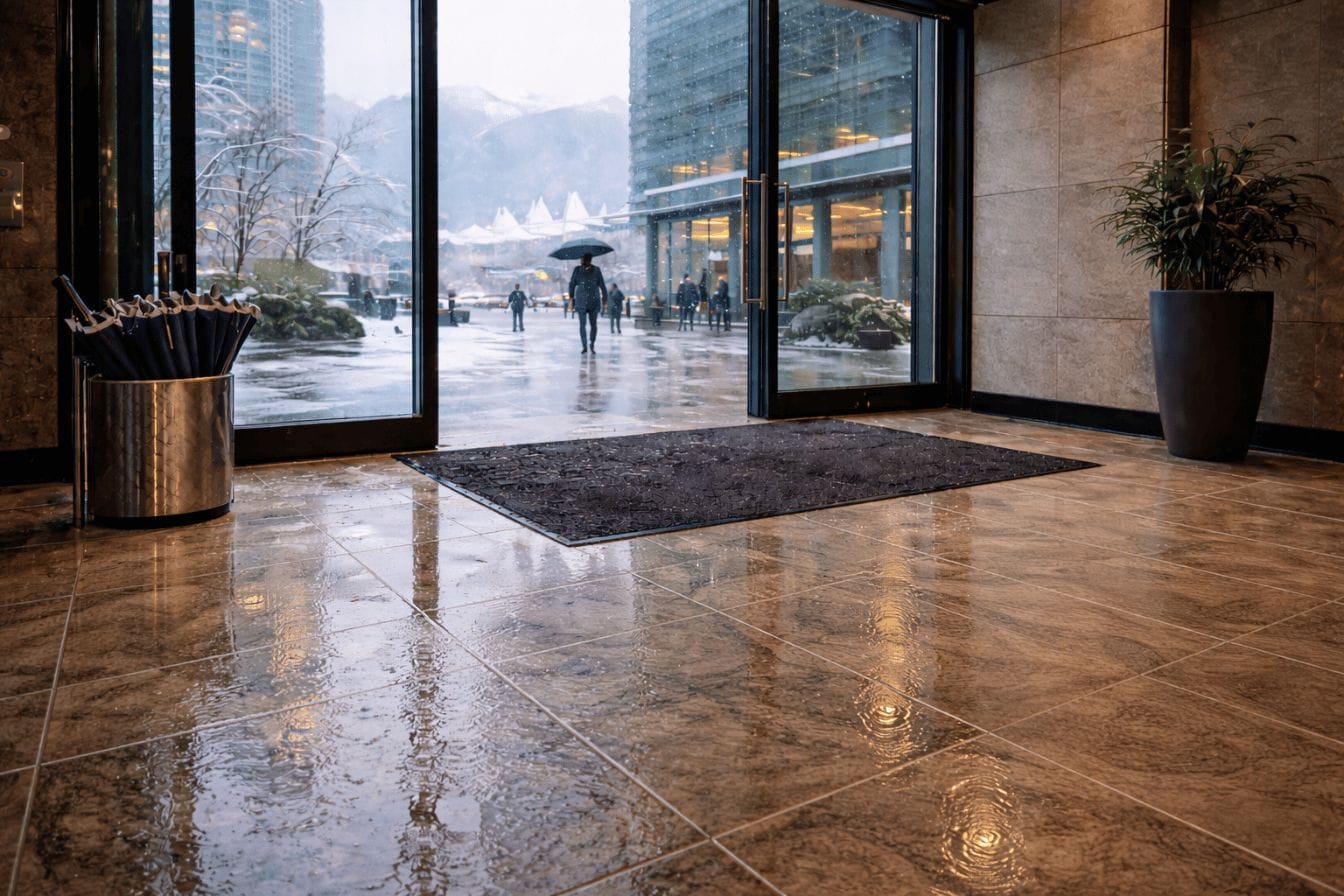
When mats are undersized, poorly maintained, or cleaned too infrequently, they stop absorbing moisture and begin transferring it instead. From there, dirt and grit migrate into hallways, elevators, and common areas.
By the time damage is visible deeper in the building, it has usually been happening for weeks or months.
Why Spot Cleaning Matters More Than Deep Cleaning
In Vancouver’s winter conditions, occasional deep cleaning is not enough on its own.
What protects floors more effectively is:
- Frequent spot cleaning in high traffic areas
- Early removal of grit before it spreads
- Regular inspection of floor finishes
- Proactive attention to corners, edges, and transitions
Waiting until floors “look dirty” often means the damage has already occurred. Preventative care is far more effective than restoration after the fact.
Floor Damage Often Shows Up as Cleaning Complaints
Many winter floor issues are first noticed as cleaning problems rather than maintenance problems.
Common complaints include:
- Floors that look clean but feel sticky
- Lingering odours near entrances
- Visible streaking or haze
- Surfaces that become slippery shortly after cleaning
In most cases, these issues are caused by residue and moisture interaction rather than poor effort. Vancouver’s winter conditions simply demand more frequent and targeted floor care.
What This Means for Vancouver Businesses
Mild winters do not reduce floor maintenance needs. They increase them in a different way.
Businesses that adapt successfully tend to:
- Focus more attention on entryways
- Increase cleaning frequency during wet periods
- Treat floor care as preventative maintenance
- Address small issues before finishes fail
Those that do not often face higher long term repair costs, more frequent refinishing, and avoidable safety concerns.
Vancouver’s winters may feel easy compared to the rest of Canada, but they are quietly hard on commercial floors. Constant moisture, active salt, and year round grit create conditions where damage accumulates slowly and steadily.
Understanding this reality allows building owners and facility managers to protect their flooring, control costs, and maintain a safer and more professional environment throughout the winter months.
When floor care strategies are aligned with Vancouver’s unique winter conditions, floors last longer, look better, and cause fewer problems year after year.